









25,000+ Teaching Jobs Announced in Sindh: A Boost for Education and Employment
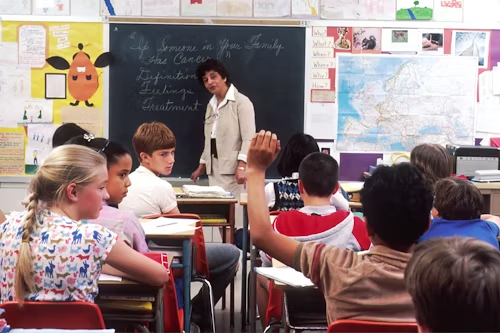
In a significant development for both the education sector and job market in Pakistan, the Sindh government has officially announced thousands of new teaching positions across the province. This large-scale recruitment drive aims to address the critical shortage of qualified teachers, improve the quality of education in public schools, and create employment opportunities for educated youth.

The move comes at a time when Pakistan’s education system is grappling with various challenges such as low literacy rates, outdated infrastructure, and inconsistent teacher presence in rural areas. With this initiative, the Sindh government hopes to bridge these gaps and work toward a more sustainable and inclusive future for education.
This blog explores the key details of the announcement, what it means for aspiring teachers, how it will benefit the education system, and what challenges lie ahead.
The Announcement: A Breakdown
The Sindh Education Department, in collaboration with the Sindh Public Service Commission (SPSC), announced its plan to recruit over 25,000 teachers in various categories, including:
-
Primary School Teachers (PST)
-
Junior Elementary School Teachers (JEST)
-
Subject Specialists for Secondary and Higher Secondary Education
-
Science and Mathematics Teachers
-
Technical and Vocational Instructors
According to the official statement, these jobs will be filled strictly on merit, and a transparent, test-based recruitment process will be followed. The SPSC and IBA Sukkur have been entrusted with conducting recruitment tests and interviews to ensure a fair and credible process.
Why This Recruitment Drive Matters
1. Tackling Teacher Shortages
According to various reports, Sindh faces a serious shortage of teaching staff, particularly in rural and underprivileged districts. Many schools either have one teacher for all subjects or are completely non-functional due to the absence of staff. By filling these vacancies, the province hopes to bring thousands of “ghost schools” back to life.
2. Improving Education Standards
The quality of public education in Sindh has been under scrutiny for years due to low teacher attendance, poor student-teacher ratios, and inadequate training. Fresh recruitment provides an opportunity to inject new energy, modern teaching practices, and digital literacy into the system.
3. Youth Employment
In a province where unemployment rates among graduates remain high, this recruitment drive is a golden opportunity. It not only provides financial stability to thousands of families but also promotes careers in public service and education — a crucial need in nation-building.
Eligibility Criteria
While full official notifications are yet to be released, preliminary reports suggest the following general eligibility requirements:
-
Minimum education: Bachelor’s degree (14–16 years of education)
-
Preference for B.Ed./M.Ed. or equivalent education degrees
-
Domicile of Sindh Province required
-
Age limit: Typically 21 to 35 years (with relaxation for special categories)
-
Written test and/or interview conducted by SPSC or IBA Sukkur
Candidates are advised to regularly check the Sindh Education Department and SPSC/IBA websites for updates and guidelines.
@babache2025 bhai ketchup😂🤣#foryou #foryoupage #babache #BabaChe_Abubakar #chebaba #funny #😆 #abubakar #بلوچستان #⭐️boy ♬ original sound – Baba Che
Exam Structure and Selection Process
To maintain transparency and meritocracy, the Sindh government is likely to implement a three-tier selection process:
-
Written Test: Objective questions based on general knowledge, pedagogy, subject expertise, and analytical skills.
-
Interview/Screening: Shortlisted candidates will be called for panel interviews to assess communication, teaching aptitude, and dedication.
-
Document Verification and Final Merit List: Academic records and domicile certificates will be cross-checked before final appointment letters are issued.
Digital Application Process
In a bid to modernize recruitment, the Education Department is expected to launch an online portal for applications, minimizing paperwork and in-person submissions. Candidates will be able to:
-
Create an online profile
-
Submit scanned documents
-
Pay fees via bank/challan
-
Receive roll number slips electronically
-
Track application status in real-time
This transition is aimed at improving accessibility and reducing corruption or favoritism in the hiring process.
Challenges to Address
Despite the enthusiasm, several challenges and concerns need to be addressed for the success of this recruitment drive:
📌 Political Influence
Merit-based hiring has often been compromised due to political pressure and favoritism. Strict monitoring by neutral agencies such as SPSC and independent observers is essential.
📌 Posting and Transfer Policy
One of the biggest issues in public education is urban posting preference. Teachers often try to avoid rural or hard-to-reach areas, leaving rural schools understaffed. A transparent posting and transfer policy must ensure equitable teacher distribution.
📌 Training and Professional Development
Hiring teachers is just the first step. Continuous training, mentorship, and classroom support are required to build effective educators. The government should allocate a separate budget for teacher training workshops and digital learning tools.
📌 Infrastructure Gaps
Many schools lack basic facilities like electricity, toilets, boundary walls, or even classrooms. Newly recruited teachers may face difficulties if infrastructure issues are not resolved alongside staffing.
Reactions from Stakeholders
🔹 Education Experts:
Academics and educationists have welcomed the initiative, calling it a “much-needed revival of public schooling”. They emphasize, however, that recruitment must be aligned with curriculum upgrades and policy reforms to have a lasting impact.
🔹 Aspiring Teachers:
The announcement has been met with enthusiasm by thousands of graduates who see this as a long-awaited opportunity. Social media platforms are flooded with queries about test dates, syllabus, and application procedures — a sign of how eager and hopeful the youth are.
🔹 Civil Society:
NGOs and civil organizations working in the education sector have urged the government to prioritize marginalized communities, including female teachers in conservative districts, to promote gender parity in education.
Long-Term Impact
If implemented properly, this recruitment drive can yield long-term benefits for Sindh:
-
Improved student learning outcomes in public schools
-
Revitalization of rural and semi-urban schools
-
Greater trust in public sector education
-
Enhanced female literacy, especially if women are given preference in recruitment
-
A renewed culture of merit, performance, and accountability
This initiative can become a model for other provinces, showing that with political will and transparent practices, the education crisis in Pakistan can be gradually overcome.
Final Thoughts
The announcement of thousands of new teaching jobs in Sindh is more than just a hiring spree — it’s a statement of intent. It reflects the government’s commitment to education reform, youth empowerment, and social upliftment. However, the success of this ambitious plan lies not just in numbers but in execution, transparency, and ongoing support for the teachers who will soon become the backbone of Sindh’s future generations.
Whether you’re an aspiring teacher or a concerned citizen, this is a moment to celebrate — and to stay engaged as the process unfolds.